Topps Is Back in the NFL: 7 Rookie Cards to Watch Before Prices Peak
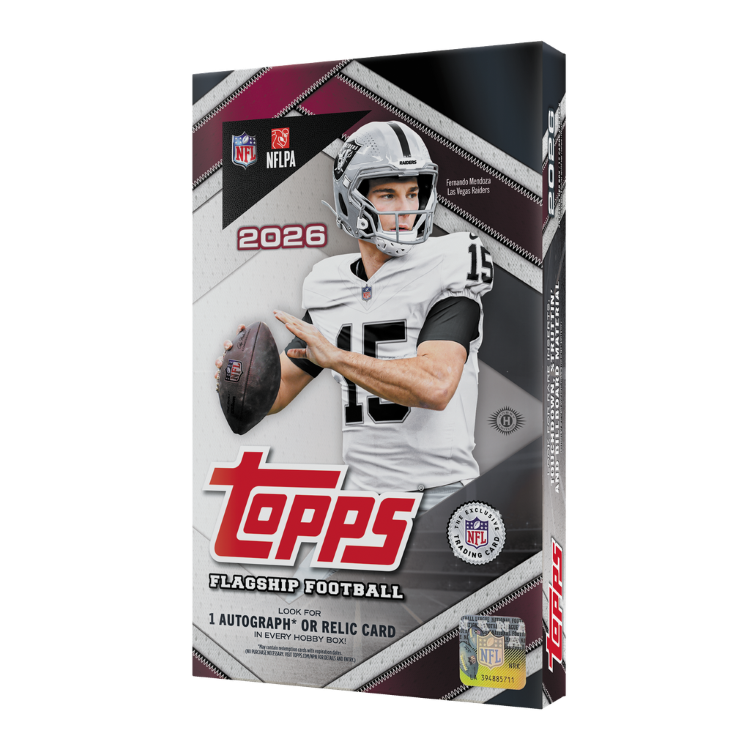
The packs are back on the table.
On August 21, Topps released 2026 Topps Flagship Football, its first fully licensed NFL flagship set in more than a decade. The return gives collectors something the hobby has been waiting for: modern NFL rookie cards with official team names, logos, uniforms, and a familiar Topps design language.
The early chase is clear. Fernando Mendoza is leading the market conversation. His name is appearing across flagship rookies, Chrome cards, autographs, and patch cards. But the first week of a football release can make every card feel like a must-buy.
Cards first. Always.
The question is not simply, “Who is popular?” It is, “Which players have the on-field path and market structure to support today’s price?”
Here are seven NFL rookie cards to watch as the season approaches.
Market note: Prices move quickly. The figures and opinions below are a snapshot from late August 2026, not guarantees of future value. Always compare recent sold listings, not only asking prices.
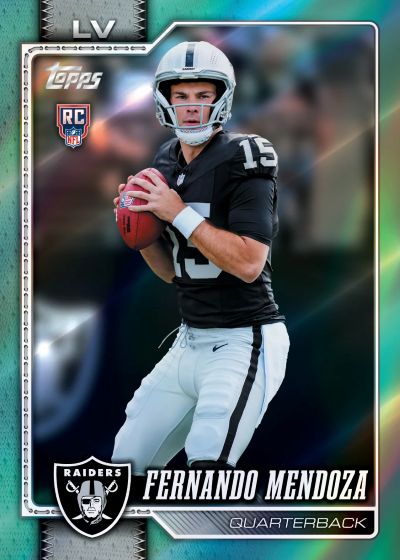
01 / Fernando Mendoza
Card to watch: 2026 Topps Flagship Football #301 RC
Also watch: Topps Chrome RC autos, Rookie Premiere autos, Topps Autograph Rookie Patch Cards
Verdict: Buy selectively. Avoid chasing the first spike.
Mendoza is the early hobby alpha of the class. He was selected first overall by the Las Vegas Raiders, has a locked-in starting opportunity, and appears as card #301 in the new flagship checklist.
His market already shows the usual split between a widely available base rookie and premium cards. Late-August sales for his standard Flagship base rookie have generally clustered around the low single digits, with many raw copies near $5. Meanwhile, reported June sales for his Topps Chrome rookie autograph were already above $400 raw, and high-end 1-of-1 patch autos have been discussed at much higher levels.
That difference matters.
The base rookie is a reasonable way to collect Mendoza without paying a premium for potential. A clean numbered parallel may also make sense for a longer hold. The risk is paying a peak price for a raw autograph before Mendoza has played meaningful regular-season football.
His preseason debut was steady rather than spectacular: 10-of-16 passing for 97 yards, one touchdown, and no interceptions. That is encouraging. It is not yet a completed investment case.
Mendoza is a good player to own. He may be a bad player to overpay for.
02 / Ty Simpson
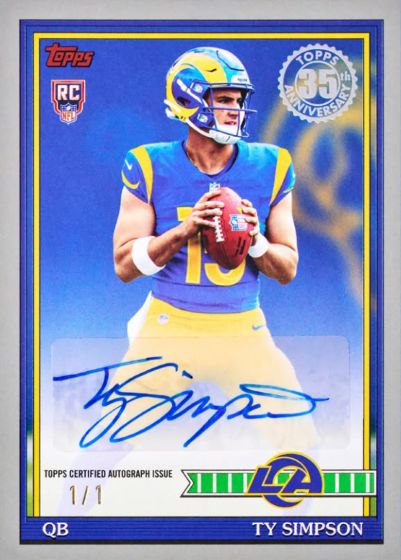
Card to watch: 2026 Topps Flagship Football #302 RC
Also watch: Rookie Real One Autographs and 1991 Topps Football rookie autographs
Verdict: One of the better early buys.
Simpson has one thing the market respects: efficiency.
In the first preseason week, he completed 21 of 25 passes for 190 yards, two touchdowns, and no interceptions. His reported passer rating was 125.0, placing him among the top rookie quarterbacks in the early preseason rankings.
That performance gives Simpson a stronger buying argument than simple draft-day hype. He operated the offense cleanly, avoided sacks, and showed enough intermediate accuracy to keep collectors interested.
The caution is volume. His average depth of target was reportedly modest, which suggests the offense leaned toward short, on-time completions. That is useful for evaluating command of the system, but it does not automatically translate to long-term hobby value.
For Simpson, the best approach is to buy the card you actually want before a breakout game creates a new price tier. A clean flagship rookie, numbered parallel, or affordable autograph offers more room than chasing a premium patch card at a launch-week price.
03 / Drew Allar
Card to watch: 2026 Topps Flagship Football #304 RC
Also watch: 1957 Rookie Variation and Rookie Premiere Autograph
Verdict: A strong watch-list buy if the price stays reasonable.
Allar has been one of the most impressive rookie quarterbacks in early preseason evaluations. CBS Sports ranked him first among rookie quarterbacks after Week 1, and other outlets highlighted his strong passer-rating performance.
That creates an interesting market position. Mendoza owns the first-overall-pick attention. Simpson owns the efficiency conversation. Allar may offer the best combination of performance signal and price discipline if collectors have not fully caught up.
His flagship rookie card is part of the main 2026 rookie run, and the set includes multiple ways to collect him: base, Golden Mirror, 1957 Rookie Variation, autographs, relics, and rookie patch cards.
Look for centered copies and clean surfaces. Flagship cards are printed in volume, so condition will separate the ordinary copies from the cards worth grading later.
The buy case is simple: strong early play, quarterback demand, and a potentially lower entry point than Mendoza. The bad buy is an unnumbered card priced as if Allar has already won a major award.
04 / Carson Beck
Card to watch: 2026 Topps Flagship Football #305 RC
Also watch: 1957 Rookie Variation and Rookie Real One Autograph
Verdict: Watch closely. Buy only below the hype.
Beck has the physical tools and early performance profile to stay in the top rookie-quarterback conversation. He reportedly posted the highest rookie quarterback grade from PFF after the first preseason week, while his passer rating also placed him near the top of the group.
That is enough to keep Beck on the board. It is not enough to ignore price.
Quarterback cards are sensitive to starting status, team results, touchdowns, interceptions, and national attention. A few strong games can move a market quickly. A difficult stretch can move it back just as quickly.
Beck is a better target in a numbered parallel, a recognizable variation, or a clean autograph than in a heavily produced base card purchased during a hot week. If his on-field play continues to support the early grades, the market may have room to grow. If not, supply will become the story.
05 / Jeremiyah Love
Card to watch: 2026 Topps Flagship Football #309 RC
Also watch: 1957 Rookie Variation, Struttin’, Rookie Premiere Autograph, and rookie relics
Verdict: Good value watch. Keep the position risk in mind.
Love is the top skill-position name on this list. August fantasy rankings have placed him among the strongest rookies overall and the leading rookie running back.
That matters because running backs can create immediate card demand. A strong workload, explosive plays, and touchdowns can move a player’s market faster than a developmental wide receiver waiting for targets.
Love also benefits from a lower market ceiling than Mendoza. His high-end cards have attracted attention, but available market data still places him behind the top quarterback chase.
The risk is familiar. Running back careers can be shorter, workloads can change, and the hobby has historically rewarded quarterbacks and elite wide receivers more consistently over long periods.
The better buy is a reasonably priced numbered card, a short print, or a card with strong visual appeal. The bad buy is paying quarterback money for a running back before his NFL workload is established.
06 / Carnell Tate
Card to watch: 2026 Topps Flagship Football #318 RC
Also watch: 1957 Rookie Variation, Rookie Premiere Autograph, and Victory Ink
Verdict: A patient receiver buy.
Tate is the kind of player who can reward collectors willing to wait for actual opportunity.
Wide receiver cards move on targets, routes, touchdowns, and visible chemistry with the quarterback. They also tend to respond strongly to one nationally televised performance. That makes Tate a useful market watch even if he is not carrying the same launch-day attention as the quarterbacks.
Topps gives him a deep rookie menu, including the standard rookie, 1957 design, autographs, relics, and a Victory Ink appearance. That variety creates entry points at several price levels.
The smart play is not to buy every version. Choose one lane. A clean flagship variation for a personal collection, or a numbered autograph at a price that reflects uncertainty, is more disciplined than paying a premium for an unproven base card.
Browse first, then ask what the card needs to become more valuable: more snaps, more targets, or more production.
07 / Arvell Reese
Card to watch: 2026 Topps Flagship Football #346 RC
Also watch: 1957 Rookie Variation, Rookie Premiere Autograph, and rookie material cards
Verdict: Value watch, not a peak-price chase.
Reese represents a different kind of NFL card opportunity. Defensive players can be excellent football investments and slower hobby investments.
Quarterbacks, running backs, and wide receivers usually receive more immediate attention because their statistics are easy to follow. Defensive players often need sacks, interceptions, awards, playoff moments, or a sustained reputation before the broader market catches up.
That can create a lower entry point. If Reese becomes a featured defender, his short prints and numbered autographs could benefit from a smaller initial buyer pool. If his role remains quiet, the market may remain quiet too.
This is not a card to chase at any price. It is a card to watch when a strong copy appears at a fair number.
The Debut Patch changes the timeline
Topps has also announced a major new NFL program. Beginning with the 2026 rookie class, rookies who make their first regular-season appearance will wear a special Debut Patch on their jersey.
After that debut, the patch will be removed, authenticated, and placed into a one-of-one autographed trading card. Those cards are expected to appear in sealed Topps NFL products released in 2027.
This creates a second market moment.
The first moment is now: flagship rookies, Chrome rookies, early autographs, and preseason performance.
The second moment arrives later: the actual Debut Patch 1-of-1 autos.
A rookie who plays immediately may have an early advantage because collectors will have a clear first-game reference point. A player who debuts later could create a different kind of suspense. Either way, the patch is tied to a specific NFL event that can happen only once.
That is why the announcement matters. The rookie card market now has another date to track besides release day.
Protect the card before the price moves
Whether your card is worth $5 or $5,000, protection starts with the same habits.
Use a penny sleeve and a properly sized top loader for raw cards. Handle glossy surfaces by the edges. Keep cards away from heat, moisture, direct sunlight, and loose storage boxes.
Grading can add another layer of protection and documentation. A grading company’s holder helps preserve the card and records an opinion about authenticity and condition. A numerical grade is not a guarantee of future value, and grading is not always cost-effective for a common base rookie.
Grade when the card is valuable enough, condition-sensitive enough, or personally meaningful enough to justify the expense.
A serious collection should also have a current inventory. Record the player, set, card number, parallel, serial number, grade, purchase price, and clear photos. Documentation helps with organization and insurance conversations.
SNL Sports owners are Virginia-licensed insurance professionals. If your collection is growing, ask about how cards and memorabilia may fit into your existing coverage. Policy terms vary, so confirm limits, deductibles, exclusions, appraisal requirements, and whether valuable cards need separate scheduling.
The next pull may be the one that changes the conversation. Keep it safe enough to enjoy.
The short list
Best early buy: Ty Simpson or Drew Allar, if the price reflects potential rather than certainty.
Best hobby name: Fernando Mendoza, but avoid paying the highest early premium.
Best skill-position value watch: Jeremiyah Love, with running-back risk included.
Best patient receiver watch: Carnell Tate.
Best defensive value watch: Arvell Reese.
Most important future catalyst: The 2027 Debut Patch 1-of-1 autos.
The NFL season will answer the biggest questions soon enough. Until then, watch the snaps, check the sold prices, protect the cards, and leave room for the next discovery.